
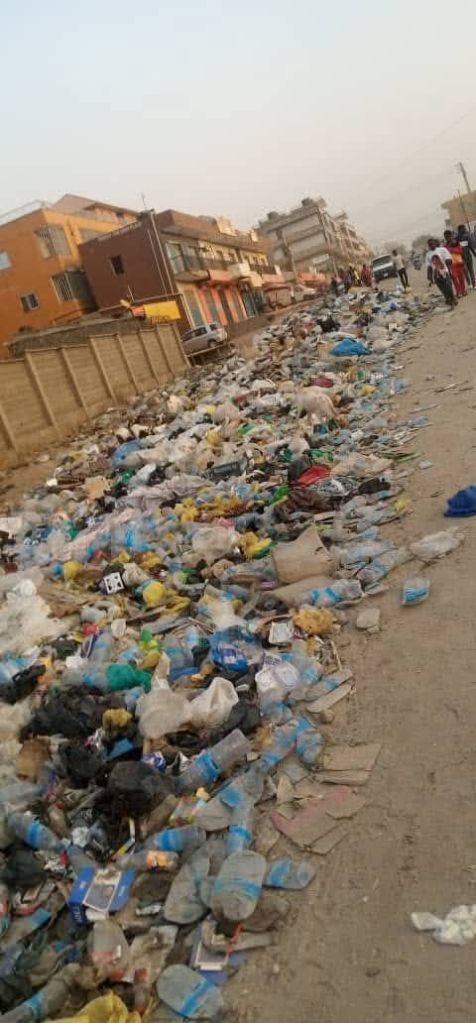
Poorly disposed off garbage on one of Juba’s streets.
I have always loved clean and organised spaces. There’s a calm that comes with them, a sense of order that sharpens my mind. On the days I leave home tidy, my thoughts flow with clarity, and I often find myself more productive and patient. But the few times I’ve rushed out leaving my home in disarray, the day almost always mirrors that chaos. Things scatter, time slips, small problems magnify, and I return in the evening only to be greeted by the same disorder I carried with me all day.
I have also noticed something else. Whenever a home or office is dirty, arguments sprout easily. People snap at each other over little things. Chaos thrives where cobwebs and clutter are allowed to reign. But in clean, ordered spaces, even modest ones, disagreements soften. People breathe easier, listen longer, and find solutions faster. Hygiene and order are not about vanity. They are about harmony of the mind and community.
Now imagine this truth at the level of a nation. Too many of those entrusted with running South Sudan live in disorganised homes. Cobwebs in the living rooms, dirty bathrooms, garbage tossed carelessly, the same cup passed around for water, are all what characterise their homes. If disorder is normal at home, is it any wonder that our public life mirrors the same? That traffic officers are chosen not by competence but by kinship? That implementing a peace agreement has failed? That garbage fills streams or spaces under bridges, or that spitting in public is seen as nothing unusual? Disorganisation, left unchecked, becomes a governing philosophy.
The reset South Sudan needs begins not with decrees or slogans, but with households where every member owns a duty: sweeping compounds, disposing of waste properly, rising early to leave a clean home, making every dwelling livable. For when our homes are schools of order, our communities will inherit clarity, and with clarity, we will resolve conflicts with reason rather than fists or guns.
In the end, nations are only reflections of the homes we keep. If you want to know the future of South Sudan, look first at the state of its living rooms and compounds.
 Koiti Emmily