
In a country where despair often overshadows hope and institutions too frequently falter in their responsibilities, there are quiet revolutions happening, led not by officials in high office, but by everyday citizens who decide they will not wait. I recently witnessed one such revolution in Gudele Block 9, a residential stretch on the outskirts of Juba, South Sudan.
A Different Kind of Independence Day
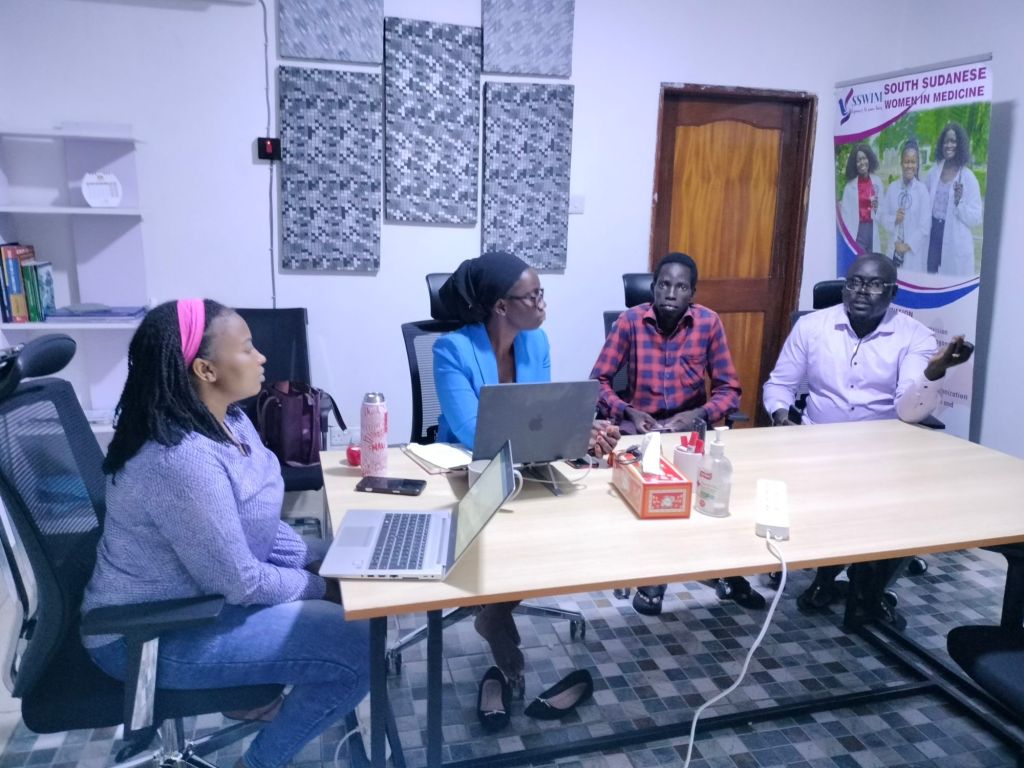
It was an ordinary afternoon on June 18th, 2025, when two unexpected visitors knocked on the gate of our organisation’s office in Gudele Block 9. As I was informed they were local youth seeking to speak to the head of the NGO, I’ll admit that a sliver of apprehension crossed my mind. But I stepped out, greeted them, and invited them in.
What followed was a deeply humbling conversation, one that revealed how a group of young people has transformed their community through sheer will, collaboration, and vision.
Youth Organising for Change
The young men had come to raise funds for an upcoming Independence Day celebration. Not a city-wide event, not a grand affair, just something to unite residents in their neighborhood. They wanted to foster community spirit, to encourage togetherness among people who, too often, live as strangers behind high compound walls.
They had no formal budget in hand because they had left it at their office. They had only a request: would our organisation contribute? Myself and a colleague listened with interest, and as they spoke more, we grew increasingly curious about what else these youth were doing.
Here’s what they’ve achieved so far:
- Road Rehabilitation: Organised residents to raise funds and partner with local government to grade and repair a key access road.
- Festive Celebrations: Decorated the entire stretch of Gudele Road to mark New Year 2025, enhancing community spirit.
- Garbage Collection: Set up a community-funded waste collection system with support from the city council.
- Greening Initiative: Planted 23 trees along community roads to improve the environment, despite setbacks with a few trees.
Vision for the Future
What struck me most wasn’t just what they had done but what they hoped to do next:
- Install street lights to deter criminal activity.
- Facilitate intergenerational dialogues between elders and youth.
- Build a community-based security model where all residents are known and accounted for.
When Government Falls Short, Communities Rise
I asked them a simple question: why not demand that the government do all this? Their answer was sobering. “The authorities just talk and deliver air,” one said. They recounted how the mayor promised to financially support their road rehabilitation but never delivered. Yet, he turned up for the ribbon-cutting with cameras in tow.
They hold no bitterness. But they are convinced that the future of their community lies in the hands of its residents, not its politicians.
Bridging the Gap: Where Hope Meets Policy
As I listened, I couldn’t help but think of the bigger picture, how such local initiatives could address some of the most difficult problems we face, including gang violence and sexual assault.
What if youth like these were supported to facilitate community dialogues on safety, gender-based violence, and accountability? What if their structures could be leveraged for public health campaigns such as the promotion of the new PCV and Rotavirus vaccines that South Sudanese Women In Medicine (SSWIM) has been working on the past months? What if WASH interventions were piloted in these self-organised neighborhoods? What if young people didn’t only carry bricks to fix roads—but also carried their voices into policy platforms?
Tribal Unity in Action
Another element of their story that inspired me was their unity across ethnic lines. One of the youth was from the Bari community, the other from the Dinka. Their collaboration wasn’t presented as anything extraordinary, it was simply what needed to be done. But in a country still struggling with inter-communal tensions, this quiet cooperation is nothing short of revolutionary.
A Call to Support, Not Supplant
For development actors, policymakers, women, and youth-serving organisations, the message is clear: our role is not to replace community agency, but to support, learn from, and scale it. Gudele Block 9 doesn’t need saviors. It needs partners. It needs recognition. It needs policies and funding that don’t extinguish community-led initiatives with bureaucracy or politics.
At a time when the narrative of South Sudan often feels dominated by what’s broken, these youth remind us of what’s working, and what could be replicated. They remind us that amidst the noise, there are quiet victories worth amplifying.
From Local Sparks to National Flame
As I write this, the youth of Block 9 are preparing their Independence Day celebrations. They’ve offered our team a slot to speak on health issues, and we plan to use it to raise awareness about vital vaccines. But beyond that, I see something greater unfolding.
This is a call to rethink development, from something done to communities, to something done with and by them.
In a nation brimming with potential but burdened by cynicism, we owe it to ourselves to nurture every spark of hope. Because when communities like Gudele Block 9 rise, they carry the rest of us with them.
Let’s Pay Attention
Let’s show up, not with answers, but with listening ears, open minds, and a readiness to walk alongside. The future, after all, is already under construction, one neighborhood at a time.
Are you part of a youth group or local government office or a non profit or private sector? Reach out if you’d like to collaborate with the Gudele Block 9 youth or explore how this model can be adapted in your area. Let’s build the future, together.

 Koiti Emmily
Great.
LikeLike
I thank you on behalf of (G B 9 Family)
LikeLike